Posts

COGNITIVE / BEHAVIORAL BIASES IN INVESTMENT JOURNEY- PART - II

 I t is highly recommended that you please read my previous blog post, before reading this. It can be accessed here:  Cognitive / Behavioral Biases in Investment Journey- Part - I (pathikvariya.blogspot.com) Here the remaining behavioural biases: 1. Trend Chasing Bias:  This is a belief that what has continued so far, will also continue in future. For example, if the price of the share has been going up for some time, it is likely to go on and on. It is similar to the herd mentality in a way.  The decision to buy or not to buy a security, should only be based on the strategic positioning of your portfolio and your investment.  2. Worry:  Worry is nothing but always keeping oneself, in the mental state of overthinking, if everything is fine. It is like anxiety. So, it is to be avoided. 3. Familiarity Bias:   The U.S. accounts for only a small fraction of global GDP, yet U.S. investors have nearly 75% of their investments in U.S.-based assets.  (Sou...
Cognitive / Behavioral Biases in Investment Journey- Part I

  [A] Introduction:   The book - 'The Psychology of Money' has a wonderful message - wealth creation is a function of both - luck and risk. One needs to be 'reasonable' to manage the risk. One should not be over rational, neither should one be too casual with their investments. It is more of an error and trial (semi scientific and semi artistic) process, where one keeps on learning with experience and try to increase the risk adjusted returns, while keeping a margin of safety. None of us is rational and emotions are all around and in us. No one can run away from them. The same emotions, pre occupations and beliefs also affect our investment decisions. In this article, we will try and explore the biases that do not allow us to take 'reasonable' decisions related to investment.  [B] What is a bias?:  According to dictionary.com, " a strong feeling of favour towards or against one group of people, or on one side in an argument, often not based on fair judgemen...

Chapter 6: Matching the Risk Profile and Asset Allocation

Image
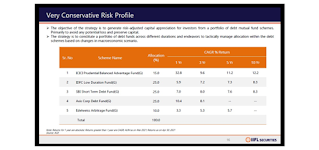
Dear Reader, *DISCLAIMER* Every example, text in this blog does not constitute any investment advice in any product or does not directly or indirectly promote any company / mutual fund/securities companies.  Please read all the five chapters of this blog at:  PPF (Practical Personal Finance) Series (ppfbypathikvariya.blogspot.com)  if you are new to this blog Frankly, this is going to be a very small post! This post just tries to give you an example, as to, what kind of asset allocation you should have, based on your risk tolerance profile. Please note that the text below does not constitute any investment advice. Neither I am qualified to offer any investment advice. The below text, primarily taken from  Best mutual funds SIP: Best mutual fund SIP portfolios to invest in 2020 (indiatimes.com)  has been used to demonstrate (as an example) as to how you should go about planning your asset allocation. If you visit this website, it clearly shows you how different p...

Chapter 5: An Introduction to Various Asset Classes/Products

Image
Dear all, I am back after a reasonably a long time. I hope you and your near and dear ones are safe from Covid19.  Before you read further, I request you to read all the previous chapters of this blog at:  PPF (Practical Personal Finance) Series (ppfbypathikvariya.blogspot.com)  before reading this blog. It is because, without reading those chapters, you won't get the best out of this post. As the previous chapter ( PPF DIARIES: CHAPTER 4: ASSET ALLOCATION (ppfbypathikvariya.blogspot.com)  clearly defines what an asset is, let us pay some more attention to the idea of various asset classes. Because, the optimum returns are generated by keeping the right asset allocation, with reference to your risk profile. Some asset classes are traditionally available and some have emerged over time. Not all the asset classes are meant for every investor. But still, knowing about the various asset classes at your disposal is a good starting point. I have avoided going into the jarg...

A caselet of Behavioural Finance

Mr. Amar Akbar Anthony is a 72 year old young man. He wants to help his daughter (Let us call her Rima Rehana Rosy) with financial planning, who is around 35. Rima Rahana Rosy is earning 50,000 Rs. Per Month but has not started saving for the future or any financial goal. Her father is very cooperative and know a bit about savings etc. She consults him for financial planning advice. He suggested following points to her: Do not invest in the market (share). It is a gamble. Mr. Amar Akbar Anthony thought like that because his brother had lost a lot of money in this share market. Open a PPF account Take LIC policies (endowment plans). Start an RD account with a nationalized bank only. As private banks are not safe. Buy a house. The bigger the better. Start accumulating a lot of gold as it is a great savings investment. What should Rima Rehana Rosy do and not do? What should Mr. Amar Akbar Anthody do and not do?

PPF DIARIES: CHAPTER 4: ASSET ALLOCATION

Dear Reader, If you are reading this, it would be prudent for you to read the previous chapters of this PPF series. That will make this reading more meaningful. Chapter 1: The CA Spectrum!  https://www.blogger.com/blog/post/edit/919490648479878981/2678530483028784714 Chapter 2: Importance of Insurance:  https://www.blogger.com/blog/post/edit/919490648479878981/8462167003907043567  Chapter 3: Risk Profiling:  https://www.blogger.com/blog/post/edit/919490648479878981/2532132870264557490  Once you have read all of the above chapters, it means, you are now ready to invest! You have created the emergency fund and got enough insurance. You also know how much risk you can afford to take. The next step in the personal finance journey is to work on asset allocation. We all know about the proverb that says not to put all our eggs in one basket. That reduces the risk of losing all the eggs if the basket is lost. But it does not tell us about how many (different types of)...

PPF DIARIES: CHAPTER 3: RISK PROFILING

Image
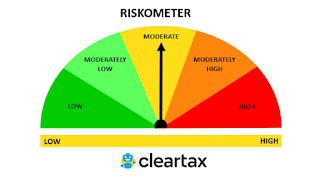
If you are reading this, please make sure that you have read last two chapters of my Practical Personal Finance (PPF) Diaries by visiting the following links: Chapter 1:  https://pathikvariya.blogspot.com/2020/05/ppf-practical-personal-finance-series.html Chapter 2:  https://ppfbypathikvariya.blogspot.com/2020/05/ppf-practical-personal-finance-series_11.html Not taking risk is taking the biggest risk, they say. It is definitely applicable to the personal finance and investment. Because if one does not one's invest hard earned money properly, the value of that money will go down due to inflation. So, as you must have heard, under the basic principle of time value of money, the value of Rs. 0.1 Million today will be less after one year. In other words, its purchasing power will go down. So, one must invest in a way, that one can beat that inflation. But then, risk is inevitable in investment. How sensex wiped out almost five to six years' profits in March 2020 is...